• I routinely find that I have a hundred little often-good things that I want to post about but (a) I don’t want to post a whole article about and yet (b) I don’t want to lose them in this rambling, barely-read record of our little life here which can so easily drift into complaining or rambling.

    With world events swirling in such frustrating ways it really is easy to get lost in the negativity and yet a piece of me is realizing with crystal clarity that the hopelessness being drilled into us day after day by the media, by the fascists, and by the universe itself is a feature (for them) not an accidental byproduct.  

    “How dare we celebrate the positives while they’re busy burning down the world?” I have been told in maybe not so literal a phrase… but the meaning has always been the same: despair you fool, and now pay us our due.

    So. I want to start a new ‘series’ on this site where I just reflect on some good things that have been going on in our lives.

    Like.

    The Kid got a summer job. I won’t tell you where or necessarily what she is doing, but she is currently getting paid a decent union wage to spend her summer outside with kids and helping the community. The only days I won’t be jealous is when the mosquitos finally come out.

    One of my longer-serving running friends is getting married today. It’s one of those tiny, family only weddings, but we took him for drinks last week and sometime today, atop a streetcar crossing the river he’ll get hitched to his long-time girlfriend, soon-to-be wife. 

    I’ve been reading more. You may have noticed from the review-count on this site, but I’ve read more in the last three months than I have in the last three years, it seems, and losing my patience with the written word while I was trying to write more was a point of distress for me lately. Digging into words as a consumer is a huge positive shift for me.

    Oh, and I finally fixed our television box last night. Two hours it took to figure out that the problem we’ve been having for months and months, the set top box resetting and inexplicable technical fails was in fact a borked power brick. The don’t tell you this but they basically put little computers inside those little power blocks now and become another point of failure. The Wife gets to watch her shows in peace now.

    The dates are secret for obvious reasons, but we booked our trip to Japan later this year. That’s about all I have to share on that for now, except to say that we have flights and hotels scheduled to spend over two weeks in Asia later this year with plans to go to Tokyo Disney, the Ghibli park, and eat a lot of tasty Japanese food. Sorry, we’ll do Korea next time.

    Lately, I’ve been making music. I mean, playing a lot and learning a lot and loving sound for the raw enjoyment of it in my own ears with no expectation of sharing it beyond headphones or my living room walls. The act of learning and honing enough skill on the piano has allowed me to flex musically beyond tinking keys and the exploration of synth sounds is a deep art form.

    Of course, finally, I can’t neglect to tell you that I get free bread all summer. Well, kinda. I stumbled on a (potentially in error) crazy deal at the grocery store where I traded in some of my loyalty points for three bags of bread flour. I think there was likely a zero missing on the redemption value, but everyone gets a break once in a while and me, I have nearly twenty kilos of bread flour thanks to my acute mathing skills in the grocery aisle. 

    See? Good stuff all around.

  • All work and no play make Brad a dull guy.

    I’ve been working on real projects, too, but I still find a lot of time to dabble in entertaining myself with no hidden agenda. This past month I’ve been stoking the seeds of rebellion and growing virtual canola, but not necessarily in that order.

    I’ve been enjoying…

    gaming: farming simulator 2025

    There are really only two types of games that exist. I mean, when you sit down and think about it—and believe me, I’ve done my share since trying to build a video game from scratch this year—but those two types of games fall basically into one of two core game mechanics: create chaos or create order. The create chaos games are simple: blow stuff up, fight, battle, knock down a wall of bricks with a little ball and on and on. The creating order games are pretty obvious, too: craft stuff, build structures, sort objects, organize those objects into neat rows. We could probably argue about the nuance of all things and that sometimes creating chaos is leading to order or vice versa, but hey, I’m trying to keep this simple. And all that said, what I can’t exactly tell you is when the first “farming” game came out because farming games (unlike this game I have been playing) are not necessarily about literally running farm.  Farming games are generally about creating order: taking a wild space and converting it into a resource-generating source.  Farming games can, yes, and often do replicate vegetable farming from reality, but too sometimes you are farming gold, or in-game energy, or dinosaur eggs, player experience points or maybe just maguffin-like doo-dahs that progress the game play, and many farming-type games use the abtraction of farming as a mechanic to create a need in the game to progress gameplay by forcing a labour-like management system of creating order out of the seeming nothingness of the game world. But Farming Simulator is literally what it says. It’s buying tractors, harvesting crops, and managing animals, all in a massive virtual space that looks like a slice of some agricultural landscape pulled from a film trope. And I’d be damned if I denied that driving a virtual tractor around gravel roads to pick up a load of wheat isn’t the coziest way to lose oneself in a few hours of meaningless order-creating video gaming. The 2025 version is probably my fourth or fifth official stab (not counting the mobile versions on my phone) at digging into this game, and really only the second one that stuck. The game is of such complexity that it is easy to get lost and eventually bored in the first layer—driving a tractor until you run out of things to tractor on—and just miss all the nuance offered at deeper levels. A thousand other reviews have already talked about the graphics and the mod base and the mechanics of the engine, so I will simply say that what is often overlooked—and probably what drives some suburban computer nerd to play games like this—is a kind of latent urgency in the genes of humanity that impels us to grow things, harvest food, and tame the land: it is like a survival instinct, almost, fulfilled by the simulator pretending to do work that is the foundation of human societies. Plus, who doesn’t like to drive a green tractor through the countryside?

    streaming: andor, season two

    There has been a meme floating around online that Andor has ruined Star Wars because it was just that good. And, frankly…I almost agree. The jibe goes something like this: watch Andor, then go back and watch the very first Star Wars film again, A New Hope. At the end when Luke Skywalker and Han Solo are getting kudos before the end credits roll, put yourself in the shoes of just one of those guys standing in the crowd some of whom were (now, according to canon) probably friends and at least coworkers with the characters of the new mini series. They had fought together, suffered together, built a rebellion through personal sacrifice for years…  and then one day some farm kid and a space trucker show up, luck out in a single battle and they get a parade, medals and literally all the glory. Oh, Luke, wipe that shit eating grin off your face. Don’t you understand the game you just stumbled into? Didn’t you watch Andor on Disney+ for fs sake? All joking aside, what makes this show so good and what I think a lot of people who like this series so much (but maybe aren’t fully able to articulate about it) see in it’s story is simple: real stakes. The whole point of the story arc that leads from the first scenes of Andor to the end of the Rogue One movie is that literally none of these people make it. The whole story is based on what is almost a throwaway line from that famous opening crawl of the original movie, that some rebel spies stole the plans for the death star, the plans that become the key the story in that same first film.  Some clever person said, hey, let’s tell that story because those guys did the real hero work and probably lost their lives to do it: stakes. Andor ignores the mysticism of the force and assumes that the regular suite of bad guys are busy somewhere else doing their bad guy shit and that the real fight is happening out of sight, in dark corners and that people who have been drawn into it because they are people who make good choices while still doing things objectively less good, are giving up everything to help everyone else for change they will never live to see: stakes. There can’t be a season three because what happens next is all the movies you love already and all these characters did that for the galaxy and the plot: stakes. Weight, purpose, and stakes. I haven’t had much good to say about Star Wars for a while, but if you are any kind of fan at all you need to watch Andor. 

  • There is never a bad excuse to read, but hunkered in the cool basement to avoid the hot weather nursing a cold Coke and speed running some fanciful fiction is better than many. 

    I won’t tell you that there is either rhyme or reason to my recent picks besides that I’m on a bit of a first in, first out ebooks from the digital discount bin on the Kobo site or whatever pops up on my library holds list first. For example, I assume the original Jurassic Park book was on sale for a buck ninety nine a couple weeks ago because there is a new (eighth!?) movie in the franchise due in theatres imminently. The same reason that I bought a new Jurassic World game on Steam for less than a cup of coffee this past weekend. I’m just riding the shockwave of the cultural vibe, it seems. And I’m okay with that, too.

    These last couple weeks I’ve read:

    Jurassic Park by Michael Crichton

    I’d be lying if I said my first read of this book—way back in the early nineties—did not influence my choice of post-secondary education. I remember that our high school librarian who knew that our little group of nerd kids were ravenous readers showed up at the side of the table where we were playing cards one lunch and held out a copy of the book with its stark white and black dinosaur bones cover to the group and asked who wanted to be the first to read it. I accepted. The novel and subsequent movie sparked a kind of renaissance in the popularization of genetic engineering akin to a 90s version of the AI goldrush of 2025: everyone wanted a piece and every piece of media—magazines, television, and more—were telling kids that biology was the career of the future. A year or so later, having devoured the novel and the concept, I was enrolled in a science degree program and the rest is a sad trombone of personal history. I can’t recall having read the book since high school, but Jurassic Park is one of those things like Star Wars—there’s been so many sequels and video games and theme park rides transect my life that, first, it was hard to recall if the novel had been one of those and, second, the source material was almost underwhelming with respect to both the official and head canon that has emerged and swirled through the decades in between. The novel is a romp. And by far lighter and less dense than I remembered, like a Grisham novel with science-ish concepts. And that’s fine. Though reflecting on the direction this book sent my life spinning felt a bit like I’d been chased along the way by a Tyrannosaurus Rex to only find out later it was little more than film prop.

    Vacationland by John Hodgman

    Over a decade ago we went on a vacation cruise in the Caribbean. The Kid was young. We were young, too, but kind of in that middle demographic of not young enough to be cool but not old enough to be completely out of touch. I had been listening to a podcast by John Hodgman (about a week before we left for Florida departure) in which he was talking about suspiciously similar cruise he was about to embark as well. Sherlock I am not, but I nonetheless figured out that the cruise itinerary on which we were coincidentally booked was simultaneously hosting the JoCo Cruise, a fan convention at sea for which at least half or more of the passengers were attending. We were not attending. We were like vacationers who show up for a quiet vacation in middle of comiccon. We spent our weekend spotting C-list celebrities from our deck chairs and watching convention-goers enjoying a completely different week than the few hundred rest of us were having on a much more typical vacation. Yet, (tho I knew he was aboard) I had not spotted Mr. Hodgman. Was he actually on this boat? Was he hiding from Wil Wheaton? Had he tumbled overboard, martini in hand, and been lost at sea? The second-last night of the cruise the convention was hosting a big party on the Lido deck but, as they were setting up, us normies were still allowed up there and so the fam and I went for a soak in the hot tub before we got evicted to the buffet. It was then, sitting there in a whirlpool in my swim trunks, drinking a cocktail when I happened to look up. There standing on the deck at parade rest in bare feet and a tuxedo was the guy himself. Just standing there. Sound-checking or vibing or just being him weird self. Core memory. My Kid, aged six, did not care at all. But if you enjoy rambling anecdotal vacation stories like this, stories that touch on odd confluences of priviledge and ecclectic knowledge, Mr. Hodgman’s book may be right up your alley.

    I’m Starting to Worry About this Black Box of Doom by Jason Pargin

    My familiarity with the writings of Mr Pargin extends back to a fondness for the various essays and comedic observations he infrequently published pre-pandemic, and that twist through my complex relationship with the publication Cracked.  When a new article or guest podcast appearance bylined with his name on it I could always tell I would need to pay slighty more rigorous attention to the plot and his wry, pulse-on-the-zeitgeist observations which so parelleled a lot of familiar vibes I couldn’t always articulate on my own. There is, of course, always a danger in looking to a single source of understanding of anything, particularly in this vastly connected reality we share, but I will admit I felt a kind of abstract, quasi-celebrity kinship to this guy with whom I shared a kind of parallel upbringing and creative motiviation. That said, his resulted in a more successful (rightfully earned) outcome, and all of this background is relevant to the tone and substance of this latest of his novels, a standalone adventure-ish story that could easily be subtitled ”Or, why people on the internet are all nuts, you shouldn’t trust a word you read, and first thing’s first: take a deep breath and calm the fuck down!” Pargin has an acute sense of the moment in which we all live, and I suspect this is largely because he has spent enough mental processing cycles pondering the outrage engines and content factories to be a successful participant in the same if for no other or better reason than to promote his writing. That can’t help but leave a few scars on the soul of any author that surface in clever or disturbing ways through a thrillride of a novel that was hard to put down once I started reading.

  • Everything grinds to a crawl during summertime.

    Maybe it’s the heat. Maybe it’s just that time of year.

    I’ve got a half dozen projects on the go right now and I’ll tell you exactly how I feel about them: I feel like I shouldn’t be squandering the summer weather sitting in the basement writing code, but damn if it isn’t too hot to be anywhere but the basement writing code right now.

    I set myself up with some strategic planning tools for myself.

    I picked up (yet another) blank notebook and started a kind of quasi-bullet journal. But, instead of tracking my water intake and groovy moods like a moody influencer, I’m using it to keep a concisely organized list of ongoing projects, both personal and professional, as well as a tidy collection of daily goals to meet.

    For example, today my four (semi-personal) tasks to accomplish were:

    • – write a blog post (in progress, hmm?)
    • – add more detail to five of my professional portfolio entries
    • – write 500 words in my novel
    • – make some art

    It all seems pretty banal if you look at it in isolation, but each of those objectives is part of a larger project or hobby I’m trying to cultivate and work on, and each day I have 4 different things to accomplish meaning that each and every day I should theoretically (a) accomplish at least 4 things and (b) move slightly closer to some goal-based efforts.

    It’s either that or nap on the couch watching YouTube, so I’m thinking this way is objectively better. And summer heat excuses be damned.

  • I resist the label of dilettante.

    That said, it may just be the most accurate representation of my entry-level approach to many of my artistic pursuits. It is, after all, the goal of most anyone to rise above what is largely considered to be a negative branding of one’s effort towards any creative interest. 

    Is labelling something a hobby bad?

    In what is almost certainly a shallow and simplified reply to a deeply complex question, I submit that it is obviously fair for us to grade the effort that one puts into any form of expression, craft, or skilled profession by the level of achievement of an individual in said activity. Yeah. Sure. That is unequivocally fair. We should admire anyone who has created and cultivated their talent to a level largely out of reach from others. We should elevate them in our esteem. We should recoginize achievement where due. And this is even more so the case in a world where such achievement is eclipsed by the corporate patronage that enables it. When nepo-babies like Elon Musk get the credit for great achievement in science and engineering simply because he footed the bill, we very much should look past the douchebag claiming all the credit to those standing in the background who did the actual work, the ones who cultivated their talent and knowledge, sold their skills to a company and built amazing things. So, in brief, I very much do think we should respect game, but also work much harder to respect the game that did the actual work. Our society is really fucked up at this.

    Those folks are at the top of their game.

    I bring this up because yet again I find myself dabbling shallow into one of my many hobbies: music. I wrote about this the other day, and yet in every shape and form you should consider me nothing more than a dabbler in music. A hobbyist. A—gulp—dilettante. I am not a professional. I am not a recording artist. I am not destined to find my way into your playlist any time soon. This is not false modesty. It is the honest confession of a guy who knows just enough to fake his way through. I can play, but that’s about it.

    Is that a bad thing?

    No. I don’t think so. But not everyone would agree. And what it brings me to is the subject of gatekeeping.

    Let’s steer this away from art and music into another example I have found in the wilds of my hobby-filled life: running.

    Running is rife with gatekeeping. It’s a sport, after all. It is, like many things, a skill-based effort to which one’s achievement is directly correlated to many things but deeply, deeply correlated to the quantifiable number of hours and kilometers one runs in training. (There is nuance here, there always is, but bear with me.) Runners who train more generally win more races, while the rest of us earn a participation medal and say things like “it was only a race against myself and my own fitness.”

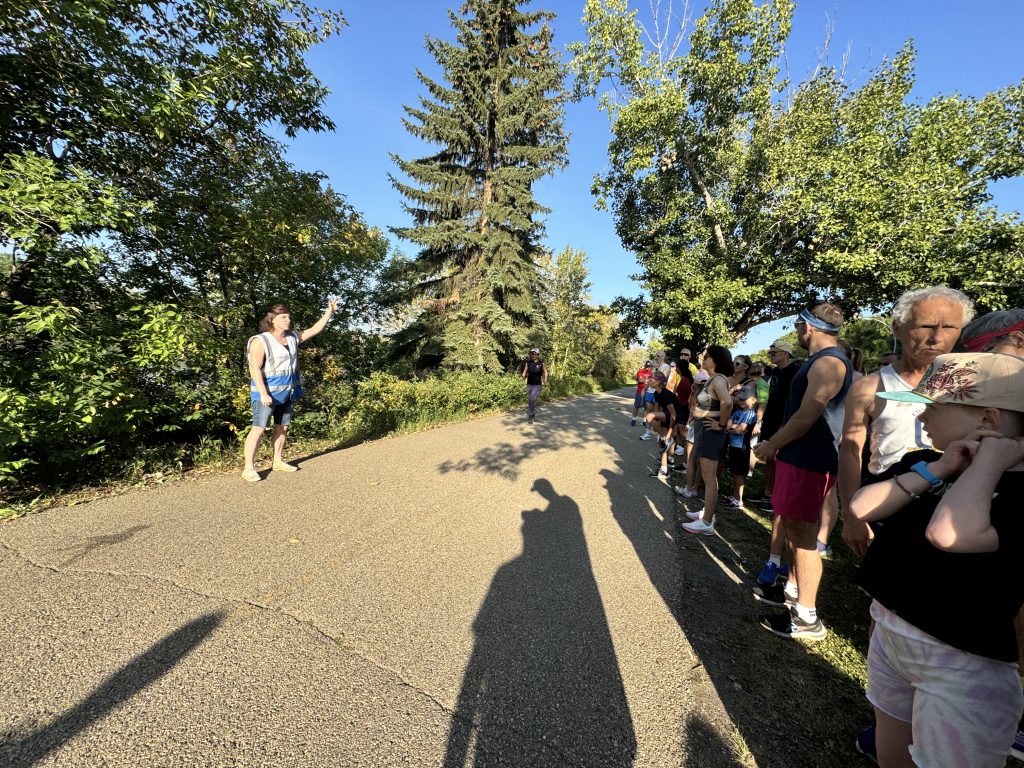
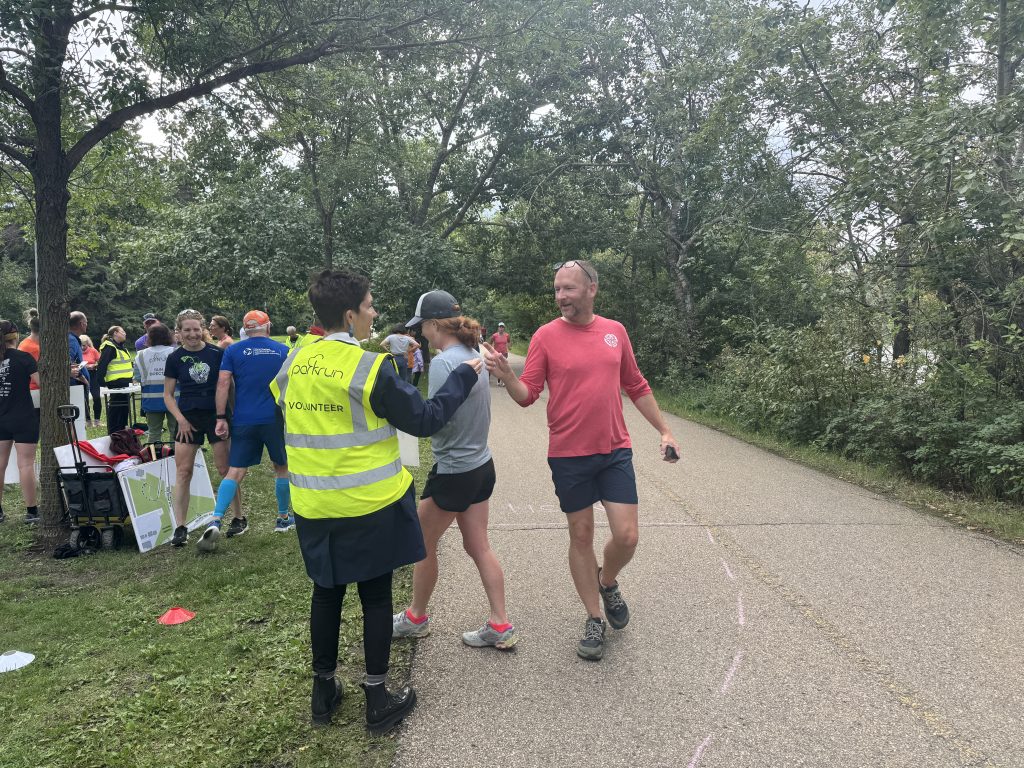
    And you know what? Lots of, if not most, runners are awesome, welcoming people. I run in a group and our philosophy is that literally anyone is welcome to join in a run and so long as you’re making any effort whatsoever then if we’re faster than you we’ll loop back to keep you with the group. We try very hard not to gatekeep the sport. It’s not perfect but I think it mostly works.

    But I have found so much of the opposite. There are people who train harder and then literally snub those who are slower, run lesser distances, or don’t pass some random threshold of achievement. Which in itself is the tricky point and leading into the point I’m trying to extract from this example. In running there is almost always someone who is faster. There is literally only one fastest guy and one fastest gal—in the whold damn world—and it’s measured and recorded on the regular.  Unless you are that person, you are not the fastest and that “some random threshold” that you have set down as a bar over which there are “runners” on one side and “posers” on the other is just exactly that: random and arbitrary.  Such has been true of every example of gatekeeping I have encountered in running in my eighteen years participating in the sport. Some gatekeeping dork who runs such and such speed or so and so distance looks down on everyone slower than them, and looks up to everyone faster than them, and says there, that’s the line. They’re serious, but these people who don’t achieve as they do are apparently lesser and don’t get the label that goes along with the sport. They’re all hobbyist joggers and I’m the serious runner. 

    Again, this is not common, but these special folks definitely exist and definitely show up at run club or meet ups or race corals or wherever. And they are everywhere. I once had a quasi-coworker who was this very person and who literally looked down their nose at me, rolled their eyes and gave an impolite “hmmph” in race coral because they knew my expected finish was slower than them.

    There is a gate to what is what and they are standing at it keeping it free of the riffraff who don’t make the cut. They are slamming it in the faces of the so-called dilettants and hobbyists behind them. If you are gatekeeping or a gatekeeper type of person, just know that there is probably a special gate for folks like you in the afterlife that you might not be able to walk through either. Rant done.

    How does this relate to music and art and all that other stuff?

    My point is just that there are gatekeepers in everything, for every interest, for any craft, profession, sport, talent, skill, whatever. There will always be those that stand with their hands up and out to tell everyone behind them in acquiring those skills or training those abilities, that to be lesser than the gatekeeper makes one a lesser: overall it makes one merely a hobbyist or a dilettant.

    And on the other side, there will be many more who lend a hand, reach backwards to teach or share knowledge, to build community and extend interest in the field. Game trains the next wave of game, as it were.

    But Brad, you say, one could argue that the label is a little more subtle than raw acheivement. Maybe it is more than gatekeeping on quantifiable ability, right? Maybe there is a vibe associated with hobbyism or being called out as a dilettant. An unseriousness. The dabbler is the guy who is knocking on the walls of the clubhouse trying to get in, but is more interested in the label than the skill. They want to call themselves a runner, but only so they can post race pics on social media. They want to be called an artist but don’t even try to cultivate a style or signature. They desire to fill a chair in a band so they can invite people to watch, but don’t pick up their instrument between concerts to put in the rigor of practice required to hone the talent. What do we make of these people? Are the gatekeepers among us correct in locking the door to folks like that?

    As a certified hobbyist I can tell you that people who are truly terrible and trying to infiltrate a field of art or expertise for giggles and false cred are probably rare exceptions, possibily crafty sociopaths, and there are likely more signs of their unseriousness than simply weak ass skills in a field. 

    What I can also tell you is that more often the apparent unseriousness of a hobbyist is likely due to an extremely high barrier to entry in this modern achievement-based online world. Someone just learning art is never going to be as talented as 95% of the posts in their feed. Someone working full time and trying to train for a marathon on the weekends is never going to beat the twenty-two year old with a track scholarship who is training his ass off and earning the world records.  Someone who picked up an instrument at forty and can only get lessons from instructors used to teaching eight year olds while juggling family life is almost definitely never going to perform in the city’s premier symphony.

    We need to give these folks a break and simply welcome them to the club as people with a shared interest, no?

    As noted, I have been dabbling in one of my hobbies again: music. I have steered my summer into trying to build up my personal knowledge of musical theory and composition, including improvisation and sound design. I haven’t put down my violin, of course, but I have poked the bear of electronic synths and all the complex terminology and methodology around them.  My first blush at this popular but enigmatic field, tho, has been one of the steepest barriers to entry I have encountered in a while. There are countless jargon-laden explanations of the technical features of these tools but when it comes to using them to create music the most common piece of advice I have found is “just play around until you find your sound”—which, of course, is like me telling a new runner just to lace up and jog around until they get faster, find a race and win it. 

    I  have been doing art for most of my life, but when I got interested in watercolours a few years ago I quickly found colour theory tutorials, advice on layering paints, books on technique with endless examples and exercises, and of course classes at the local community centre. 

    When I started running, I joined a run club and learned about gear and training schedules and went for speed training sessions and hill training sessions and got into cross training with friends. 

    “Just play around” was on the table, but was never the whole buffet.  

    I wouldn’t necessarily think of this lack of resources as gatekeeping, but there is a kind of exclusivity to entry that resembles gatekeeping when a hobby, any hobby, doesn’t reach back a hand to pull the dilettants in the direction of something more. 

    I resist the label dilittant, not because it wrong or I am above it, but because it implies an unwelcomeness to some secret club. Far be it from me to judge an entire community based on my week of experience looking for the front door, banging on the walls and asking how do I get inside, how do I learn, how to I get better guys?!  I aspire to rise above and hone skills but I definitely doubt I will get there by dabbling and just “playing around” as it were. 

    For now, it will not disuade me from the effort—and maybe for some that is the whole point, to create a barrier to keep the field small and pure—but as a guy who has done his best to elevate others in fields where I do excel, where I am less likely to be kept from passing the closed gate, I have been the one reaching back to train and pull people along so I naively hope and assume that every field, every art, every sport, every endeavor of creativity or skill has people like that—one just needs to find them—and too, resist the label to keep at it.

    Hobbification is not a bug, after all, it’s a feature of a strong system and the key to bringing new people and new talent on board. And I honestly think that any field worthy of study or interest has reached maturity when it recognizes this and says sure, just “play around” but we’re here when you need to take the next step. 

blog.8r4d.com

Ah. Some blog, huh?

I’ve been writing meandering drivel for decades, but here you’ll find all my posts on writing, technology, art, food, adventure, running, parenting, and overthinking just about anything and everything since early 2021.

In fact, I write regularly from here in the Canadian Prairies about just about anything that interest me.

Enjoy!

Blogging 411,270 words in 541 posts.

8r4d-stagram

collections

archives

topics

tags

adventure journal ai autumn colours backcountry stories backpacking backstory backyard adventures baking blogging book review book reviews borrowed words bread breakfast is the most important meal campfire camping cast iron love cast iron seasoning coffee comic comics cooking cooking with fire cooking with gas december-ish disney dizzy doing it daily drawing & art exploring local fatherhood garden goals GPS gadgets head over feets insects inspiration struck japan kayaking lists of things local flours sours local wilderness meta monday mountains nature photography new york style pancakes pandemic fallout parenting personal backstory philosophy photographer pi day pie poem politics questions and answers race report reading recipe reseasoning river valley running running autumn running solo running spring running summer running together running trail running training running winter science fiction snow social media sourdough bread guy spring spring thaw suburban firecraft suburban life summer summer weather sunday runday ten ideas the socials travel photo travel plans travel tuesday trees tuck & tech urban sketch urban sketching video weekend weekend warrior what a picture is worth why i blog winter weather wordy wednesday working from home work life balance youtube